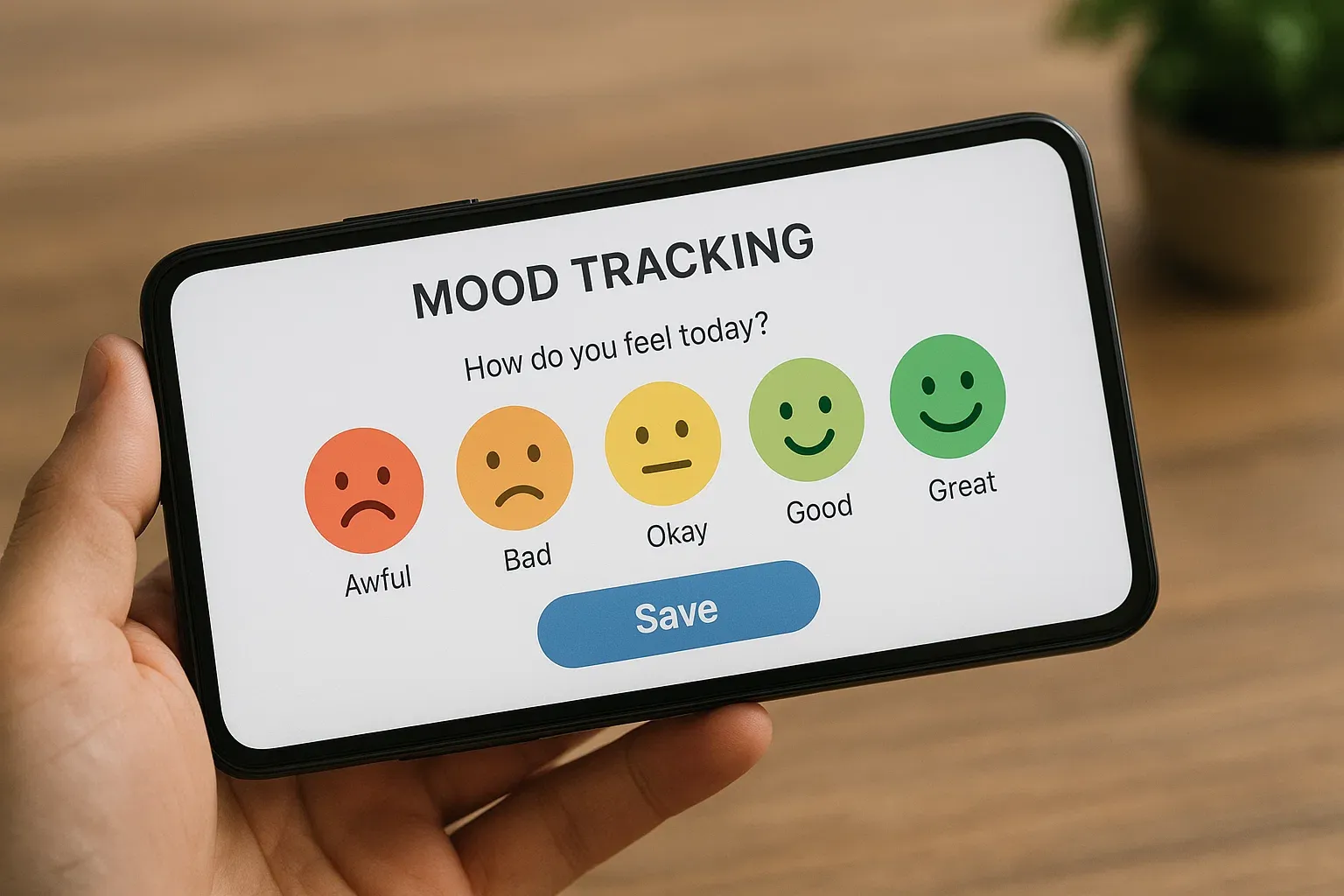
Looking for the best mood tracker app? What research says tracking does, what to look for, and 5 apps compared honestly, including free picks.
WTMF Team
The best mood tracker app is the one you'll actually open on a bad day. That means it takes seconds, helps you put a word to what you feel, and shows patterns you can read without a stats degree. Quick picks: Daylio for logging without writing, Bearable for mood plus physical health, How We Feel for learning emotion words, Apple Health if you want it built into your iPhone, and WTMF if you want check-ins connected to journaling and someone to talk to.
Full disclosure: we make WTMF, so we've tried to be fair and factual about everyone else. Below is what tracking actually does, a checklist for choosing, and the five apps compared.
Mostly, they help by making you more aware of your own emotions, and that awareness seems to be what matters.
In a randomized trial with 114 young people aged 14 to 24, recruited through their GPs with mild or worse depressive symptoms, one group tracked their mood and stress on their phones for two to four weeks. A comparison group tracked only their daily activities. Tracking mood raised emotional self-awareness, and that rise in self-awareness predicted a drop in depressive symptoms.
A 2018 study of 234 people using a mood-diary app found something similar. The more people engaged with the app over 30 days, the more their depression and anxiety scores fell and their wellbeing rose. For people who started out clinically depressed or anxious, greater emotional self-awareness explained part of that change. The authors note there was no control group, so treat it as encouraging rather than proof.
The takeaway: a tracker isn't magic, and a calendar full of colored dots won't change much on its own. What helps is noticing, naming and reviewing. If you're new to the idea, our beginner's guide to mood tracking covers the basics.
Before comparing apps, decide what you need. Run through this checklist:
| App | Best for | Platforms | Cost to start | Standout feature |
|---|---|---|---|---|
| Daylio | Logging without writing | iOS, Android | Free to download | Mood and activity stats, Year in Pixels |
| Bearable | Mood plus symptoms and health | iOS, Android | Free version, paid upgrade | Correlations between habits and how you feel |
| How We Feel | Learning to name emotions | iOS, Android | Free (nonprofit) | Emotion vocabulary and regulation strategies |
| Apple Health (State of Mind) | iPhone users who want it built in | Apple devices | Free, built in | Links mood with sleep, exercise and daylight |
| WTMF | Mood, journaling and talking it out in one place | iOS, Android | Free mood check-ins | Patterns linked to your journal and chats |
Daylio is a micro-diary: pick a mood and the activities that filled your day in a couple of taps, no writing required. Notes, photos and voice memos are optional. It turns entries into stats, charts and correlations, plus a "Year in Pixels" view of your whole year. On privacy, Daylio says entries stay in the app on your device and aren't sent to its servers, with optional backups to Google Drive or iCloud and a PIN or biometric lock. Worth knowing: because your data lives on your phone, set up backups so you don't lose it when you switch devices.
Bearable goes wider than mood. You can track emotions, sleep, energy, symptoms, medication, menstrual cycle and more, and it looks for correlations between your habits and how you feel. It was made by people with chronic health conditions, and it shows. The free version covers custom moods and symptoms with weekly reports, and a paid subscription adds features including correlation reports and your full history beyond the last 30 days. Worth knowing: if you only want a quick mood log, all those options can feel like a lot.
How We Feel is a free app from The How We Feel Project, a nonprofit. Its science team is led by Dr. Marc Brackett at the Yale Center for Emotional Intelligence. The focus is emotional vocabulary: you check in, learn more precise words for what you feel, spot patterns over time, and try short strategies to regulate emotions in the moment. Worth knowing: it's built around learning and reflection, so it's less about correlating mood with sleep or symptoms.
If you're on iPhone, you already have a tracker. In the Health app, State of Mind lets you log a momentary emotion or your overall mood for the day on a slider. You can add words for how you feel and what's affecting you most. Its charts show associations and line your mood up against lifestyle factors like exercise, sleep, time in daylight and mindful minutes, and you can set reminders. Worth knowing: it's Apple-only, and it's a log more than a guide.
We built mood tracking in WTMF for people who want more than a log. Check-ins take two taps, notes are optional, and you get calendar, chart and cluster views across 7, 30 or 90 days. Each check-in links to your journal entries and chats, so you can see the context behind a dip, not just the color. Reminders are off by default, mood entries are encrypted on your device, and check-ins are free. Worth knowing: WTMF flags patterns as gentle observations, not diagnoses, and it doesn't track physical symptoms the way Bearable does.
The app matters less than the habit. Here's a simple two-week plan:
Pairing a tracker with a few lines of writing makes the review far richer. We wrote about how journaling and mood tracking work together. If your low points cluster around rough, restless nights, that's a pattern worth acting on. For a structured approach to anxious days, try this mood-tracking guide for anxiety.
One honest caveat: if checking in starts to feel like homework, or staring at the chart makes you more anxious, scale back to once a day or take a break. Tracking is supposed to help you, not grade you.
A tracker can tell you something's off. Sometimes you'll have a mood you can't explain, and that's normal. But the NHS describes depression as feeling persistently sad for weeks or months, rather than a few days. It advises seeing a GP if you think you might be depressed, and not delaying. Your mood log can make that appointment easier: it gives you concrete dates and patterns to talk through.
If you're tracking a diagnosed condition, ask your clinician which app or format they'd like you to use so the data is useful to them.
Whichever app you pick, the win is the same: noticing sooner and understanding yourself a little better each week. If you'd like your check-ins connected to a private journal and a voice that listens at 2am, WTMF is free to try.
It depends on what you want to learn. How We Feel is free and built around naming emotions precisely. Apple Health's State of Mind is free and built into iPhone. Daylio is free to download, Bearable has a free version with a paid upgrade, and WTMF's mood check-ins are free.
They can, mainly by building emotional self-awareness. In a randomized trial with young people who had mild or worse depressive symptoms, tracking mood and stress increased self-awareness, which in turn predicted fewer depressive symptoms. Tracking works best when you review the patterns, not just log entries.
Once a day at a consistent time is enough for most people to see patterns within a couple of weeks. Add extra check-ins only when something shifts. If logging starts to feel like homework or makes you more anxious, scale back.
No. A mood tracker is an awareness tool, not a diagnostic test. If your entries show low mood that lasts for weeks, or it's affecting daily life, bring them to a GP or mental health professional. They can be a useful starting point for that conversation.