A list of emotions grouped by family and intensity, from mild to intense, plus why naming feelings precisely helps and how to use the list in a daily check-in.
WTMF Team
"Fine" and "stressed" cover a lot of ground. This list of emotions gives you more precise words, grouped into families and sorted from mild to intense, so you can find the one that actually fits. Below that: why precision helps, how emotions differ from feelings, and a 60-second way to use the list in a daily check-in.
It sounds too simple to matter, but research suggests the word you choose does real work.
In a brain-imaging study, people looked at emotionally negative images. When they labeled the emotion in the image, activity in the amygdala, a region involved in threat responses, dropped compared with other ways of processing the same images. The researchers call this affect labeling: putting feelings into words seems to turn the volume down.
Precision matters too. A 2015 review of research on emotion differentiation, which is the ability to tell similar feelings apart, found that people who experience their emotions with more detail tend to cope better. Under intense distress, they're less likely to fall back on harmful coping like binge drinking or aggression, and they tend to have less severe anxiety and depression. The authors also note that this skill can be improved.
"Bad" gives you nothing to work with. "Disappointed" points toward an expectation that wasn't met. "Overwhelmed" points toward too much at once. "Lonely" points toward people. Each word suggests a different next step.
Find the family that feels closest, then move across the row until a word fits. Intensity matters: "irritated" and "furious" are both anger, but they call for very different responses.
| Family | Mild | Moderate | Intense |
|---|---|---|---|
| Happy | content, pleased, okay | cheerful, glad, delighted | joyful, elated, ecstatic |
| Calm | settled, at ease, rested | relaxed, peaceful, relieved | serene, safe, deeply grounded |
| Connected | warm, friendly, accepted | grateful, appreciated, close | loved, adored, deeply connected |
| Confident | capable, steady, curious | proud, hopeful, motivated | empowered, inspired, unstoppable |
| Sad | low, wistful, let down | disappointed, lonely, hurt | grieving, heartbroken, hopeless |
| Anxious | uneasy, unsettled, tense | nervous, worried, overwhelmed | panicked, terrified, dread-filled |
| Angry | annoyed, irritated, impatient | frustrated, resentful, bitter | furious, enraged, betrayed |
| Ashamed | awkward, self-conscious, sheepish | embarrassed, guilty, regretful | ashamed, humiliated, worthless |
| Drained | tired, bored, flat | exhausted, unmotivated, restless | numb, empty, burnt out |
| Unsure | puzzled, hesitant, distracted | confused, torn, insecure | lost, stuck, paralyzed |
A few words don't fit neatly in one row but come up often: jealous (angry plus anxious), nostalgic (happy plus sad), bittersweet, vulnerable, ambivalent (pulled two ways at once) and relieved-but-shaky. Mixed feelings aren't a sign you're doing it wrong. They're just more accurate.
Some situations reliably bring up the same few feelings. If you're stuck, try these as a starting point:
Notice how many of these come in pairs or clusters. Most real moments do.
In everyday conversation, nobody needs to separate them, and this list uses them interchangeably. Some researchers draw a line: "emotion" for the whole response in your brain and body, "feeling" for your conscious experience of it. If that distinction helps you, use it. If not, skip it. For a check-in, picking the precise word matters far more than the label for the category.
Here's a quick routine you can run at the end of the day or whenever something shifts:
A worked example: "stressed" at 6pm becomes high energy, unpleasant → anxious → overwhelmed, 7/10, three deadlines on Thursday. That's something you can act on: split the deadlines, ask for an extension, or make a list. "Stressed" on its own just sits there.
If you'd like to make this a habit, our beginner's guide to mood tracking explains how to start. For writing it out, the "arrive" step in our journaling for mental health routine uses exactly this kind of word-plus-number check-in.
The Feeling Wheel. The circular chart you've probably seen on a therapist's wall traces back to the Feeling Wheel, published by Gloria Willcox in the Transactional Analysis Journal in 1982. Broad feelings sit in the center, and more specific words radiate outward. Many adapted versions exist. The table above follows the same idea, sorted by intensity instead of rings.
Apps. Several mood apps build vocabulary right into the check-in. How We Feel focuses on learning precise emotion words, and Apple Health's State of Mind lets you add words to each entry. We compared these and others in our roundup of the best mood tracker apps.
Your own shortlist. After a couple of weeks, notice which ten or so words you use most, and keep them handy. A personal list beats a perfect one.
Sometimes a list like this makes a pattern visible. If words like hopeless, empty, numb or worthless keep showing up most days, take that seriously. NIMH advises seeking professional help if you have severe or distressing symptoms that have lasted two weeks or more, and a primary care doctor or GP is a good place to start. If numbness is the main thing you're noticing, our guide to emotional numbness covers common causes and next steps.
If you're struggling or having thoughts of suicide, please reach out now. In the US, call or text 988. In India, call Tele MANAS on 14416 or 1-800-891-4416. Elsewhere, find a local helpline at findahelpline.com.
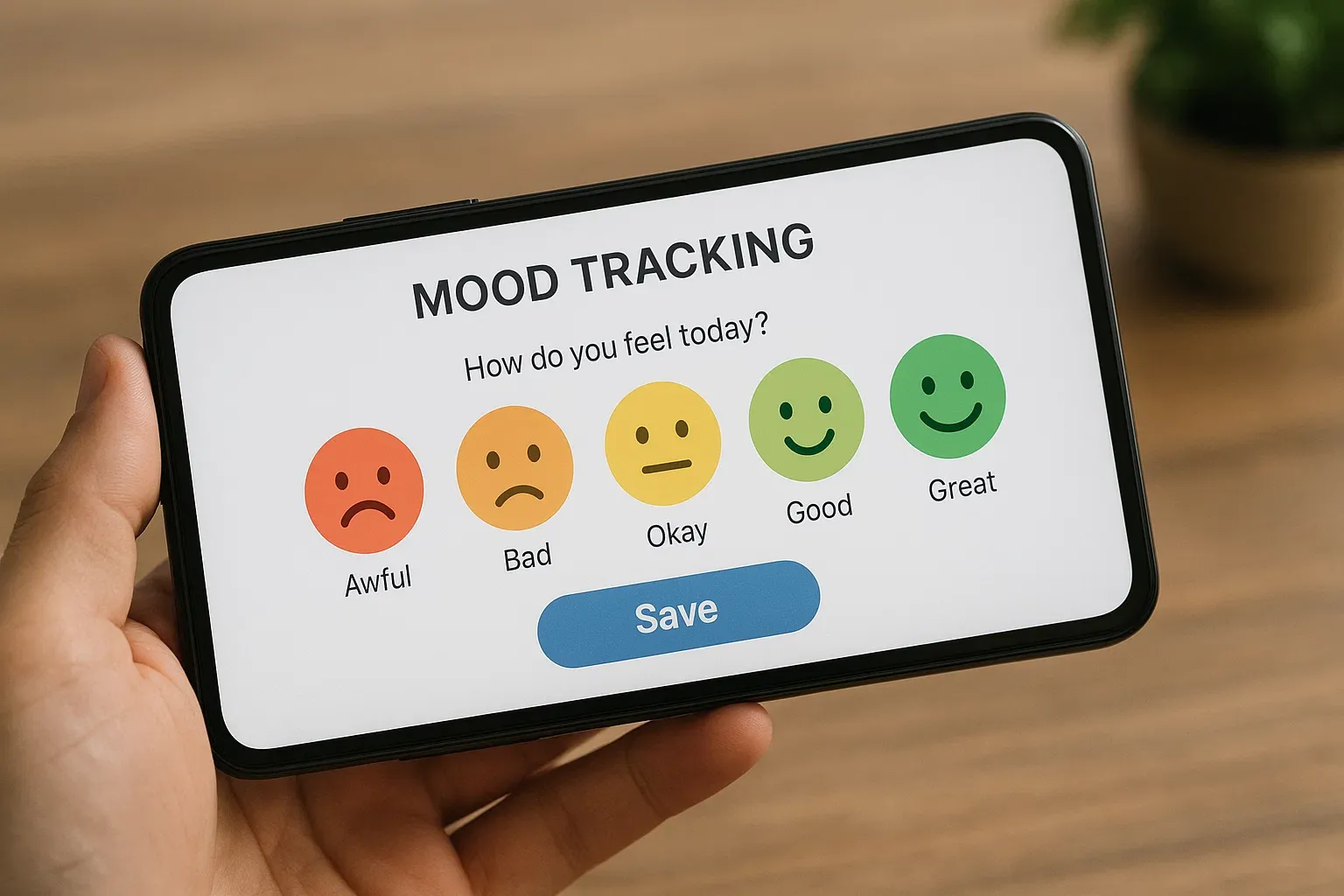
Mood tracking in WTMF lets you pick from a soft palette of moods in two taps, add a word or a sentence if you want, and see patterns across weeks. And for the days when nothing on this list quite fits, you're not alone. We wrote about the mood you can't explain, and talking it through often helps you find the word.
Start small: tonight, pick one word that's more precise than "fine". That's the whole exercise.
There's no single agreed list. Most frameworks group feelings into a handful of families, such as happy, calm, sad, scared, angry and ashamed, with many more specific words inside each. What matters for everyday use is finding the word that fits best, not memorizing a model.
A feelings wheel arranges emotion words in rings, with broad feelings in the center and more specific ones toward the edge. One of the best-known versions is the Feeling Wheel published by Gloria Willcox in the Transactional Analysis Journal in 1982. You start in the middle and work outward until a word fits.
Research suggests putting feelings into words can take some of the edge off them. In a brain-imaging study, labeling the emotion in a distressing image reduced activity in the amygdala, a region involved in threat responses. People who describe their emotions more precisely also tend to cope better under stress.
In everyday conversation the words are used interchangeably. Some researchers use 'emotion' for the whole body-and-brain response and 'feeling' for your conscious experience of it. For a daily check-in, the distinction doesn't matter much. What helps is picking a precise word.